01
OpenTTD
An open-source reimplementation of Transport Tycoon Deluxe with modern platform support.
 OpenFA
An independent reconstruction of Fragile Allegiance
Let’s change that.
Latest public preview 0.495 · Windows + Linux · not a finished product · 13 September 2026
OpenFA is an independent reconstruction of the 1990s strategy game Fragile Allegiance. It recreates asteroid colony management, diplomacy and combat for modern systems, using behaviour documented in the original game.
Earlier open reconstructions
OpenTTD and OpenRA are practical examples of long-running open strategy projects.
01
An open-source reimplementation of Transport Tycoon Deluxe with modern platform support.
02
A portable engine for several classic Command & Conquer games.
03
OpenFA applies the same general idea to Fragile Allegiance, with separate code based on research into the original.
OpenFA is independent of both projects. OpenRA influenced some architectural decisions.
The original game
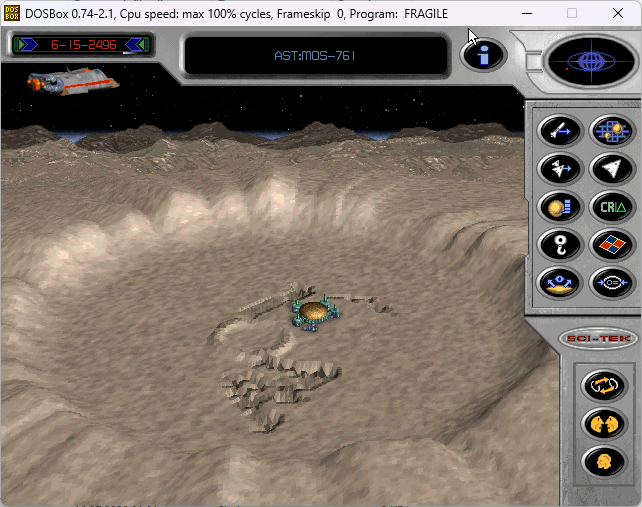
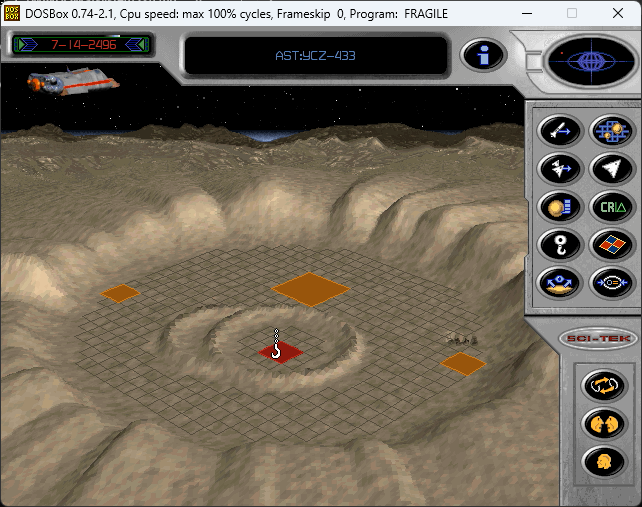
In Fragile Allegiance, you manage TetraCorp colonies in the Fragmented Sectors: survey asteroids, build settlements and ship ore to the Federation.
Survey asteroids and establish working colonies.
Balance utilities, labour, storage and ore transport.
Trade and negotiate, or use espionage and sabotage.
Research technology, build fleets and defend each colony.
Original game design
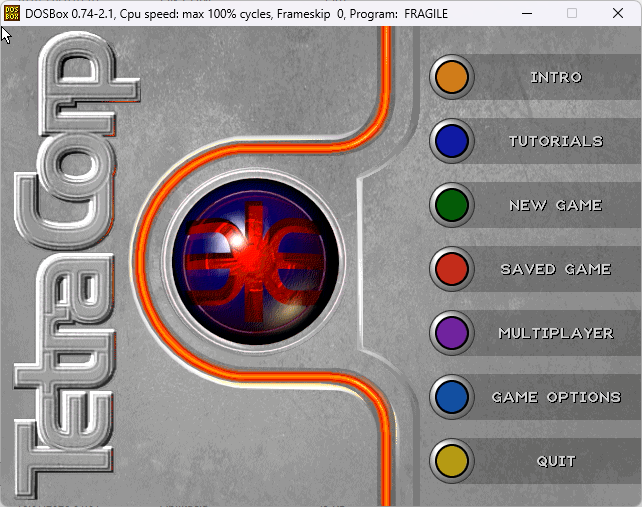
Fragile Allegiance combines colony management, moving asteroids, diplomacy, espionage, research and combat.
The original game remains commercially available from GOG.com and Steam.
The reconstruction
OpenFA reconstructs behaviour from the original program, game files, saved games and direct comparison with the game in action. Screenshots alone are not treated as proof.
OpenFA is
OpenFA is not
Content and extension packages
An .ofapkg can add or change parts of the game without rewriting the engine itself. This lets OpenFA keep a faithful version of the original game while also supporting optional extensions.
New contentBuildings, ships, missiles, ores, research, trade, personnel and scenarios.
Interface and visualsAnimations, HUD elements, extra on-screen information, status indicators and other presentation changes.
New rules and featuresPackages can use features provided by the engine and combine them into new gameplay elements.
The original stays separateThe standard game keeps Fragile Allegiance content and behaviour, while extra ideas can be enabled separately.
Packages already cover far more than the construction catalogue: new missiles, rare asteroid types, extra surface information, visual effects and industry systems are all possible. This is the format intended for OpenFA mods and optional extensions.
Reconstruction principles
How the work gets done
AI helps search the decompilation; tests replay known cases. Original data remains the reference.
01 / Analysis
AI helps find connections in the decompiled program and large amounts of game data. Important conclusions still have to be confirmed by the original game or repeatable tests.
02 / Verification
Automated tests check saved games, gameplay systems, graphics and repeatable situations taken from the original.
03 / Accountability
Names and fidelity claims are reviewed manually. Visual changes are compared in the target client.
Reconstruction in progress
Current work is grouped as recovered, running or active.
Recovered
Readers for picture, sprite, palette and video containers.
Recovered
OpenFA can read complete worlds from original saves: asteroids, factions, buildings, ships and other gameplay data.
Running in OpenFA
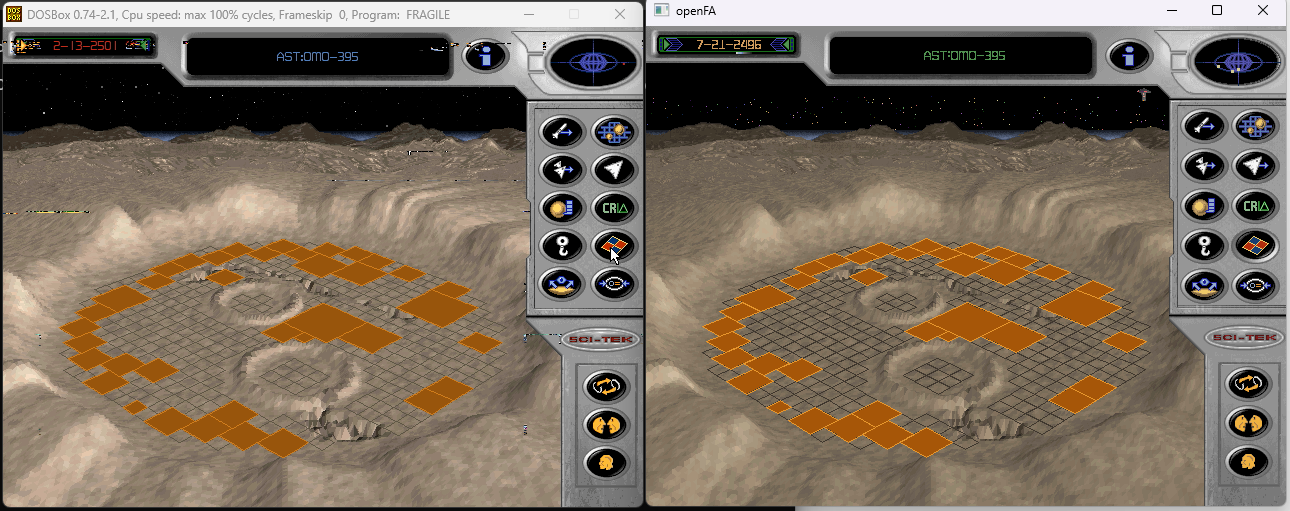
Terrain, craters, buildable areas and graphic layers are reproduced from the original rules.
Running in OpenFA
The map keeps the original scale and look, shows sensors, owners and objects, and behaves normally under the mouse.
Running in OpenFA
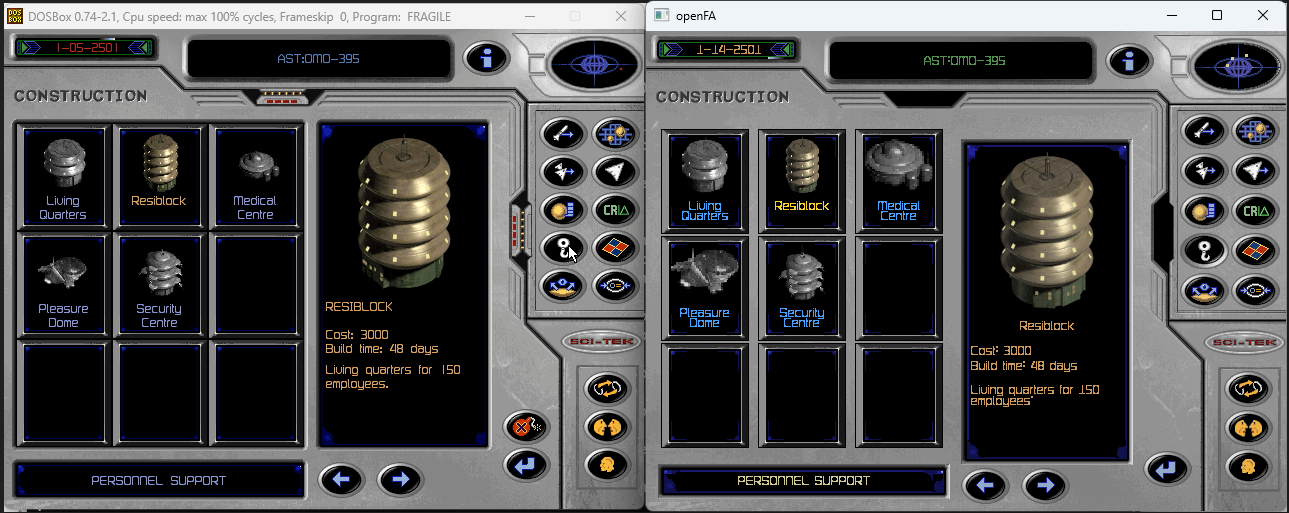
Construction, ship production, missiles, Asteroid Engines and the gameplay needed for tutorials 1–6 are already working.
Running in OpenFA
.ofapkg mods and extensions.ofapkg packages can add content, new features and interface changes without altering the standard game.
Active work
We now understand how the original game kept multiplayer sessions synchronized. Playable multiplayer in OpenFA is still future work.
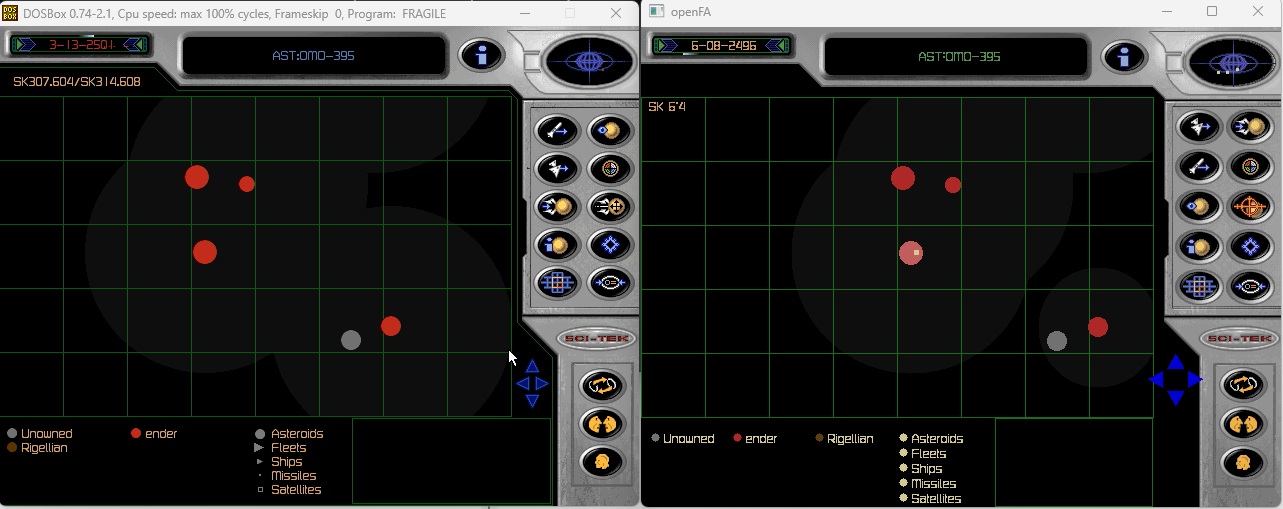
Reference comparisons
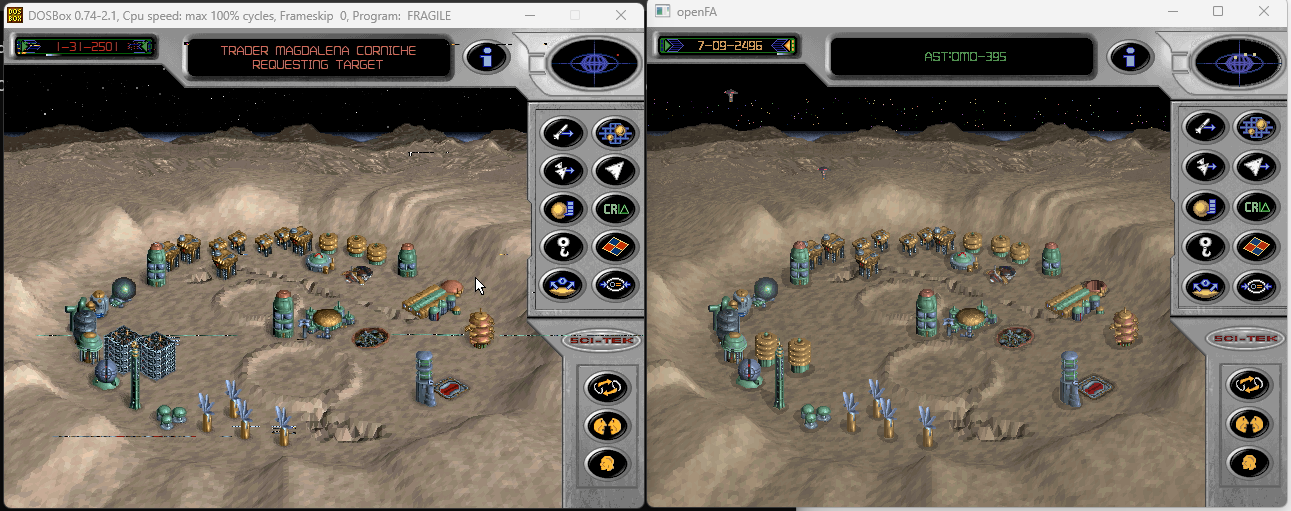
Original on the left, OpenFA on the right. Select an image for full resolution.
Executable analysis
Original assets
Saved games
Watching the original game in action
Development journal
Entries cover verified milestones rather than individual changes.
Preview 0.495 reconnects asteroid heading and power controls to the recovered strategic movement model.
Read entry–
The 0.478 nightly produced the first external bug reports that were reproduced and fixed in the following 0.495 preview.
Read entryThe strategic world now supports native arenas, a continuous camera and spaces substantially larger than the original game.
Read entryQuestions from the sector
Yes, but only as a public preview. It is not a finished product and incomplete systems may fail. A local installation of the original Fragile Allegiance is required. Current builds are available from the openFA preview releases.
Yes. OpenFA imports required data from a legal installation of Fragile Allegiance. It does not download or redistribute the original game assets.
It is an independent reconstruction. The original source code is not available.
Public preview builds are currently published for Windows x64 and Linux. Both remain development builds rather than supported final releases.
The goal is to match presentation and behaviour. Extensions stay in separate packages.
Yes. .ofapkg packages can add buildings, ships, missiles, scenarios, interface changes and new features supported by the engine. The standard Fragile Allegiance experience can remain untouched.
Yes. AI helps analyse decompiled code and correlate data. Findings still require original sources or reproducible tests.
It is a spare-time project, developed mainly in summer. There is no release schedule.
No date yet. The source link will appear here when the repository opens.
Development journal
The journal follows the major milestones, discoveries about the original game and new things that can already be seen or tested.
Enter the devlog